
Half-Day Course in Bukchon Hanok Village? Time, Transportation, and Tips
If you want traditional atmosphere photos in Seoul, Bukchon Hanok Village is a suitable half-day course.
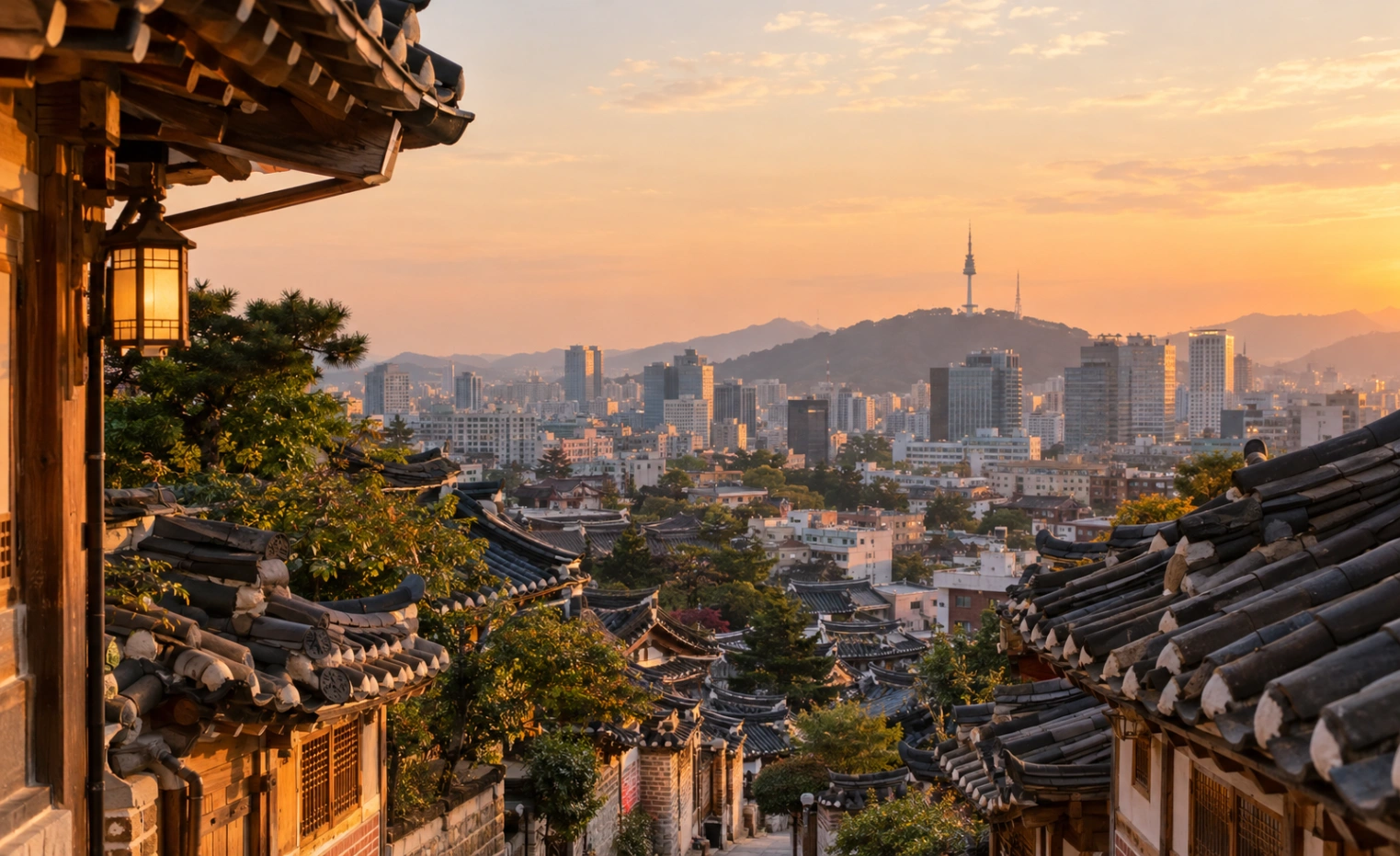
As you walk along the hanok, alleys, stone walls, and sloped paths, you can capture urban scenery peeking through the tiled roofs.
Since it is a living space inhabited by actual residents, there may be restricted viewing areas, so it's important to explore quietly.
- ✓Recommended time: about 2-3 hours
- ✓Getting there: Take subway line 3 to Anguk Station, exit 1 or 3, and walk.
Where is Bukchon Hanok Village? How to get there from Anguk Station
Bukchon Hanok Village is an 'actual living' old neighborhood that combines traditional hanoks, alleyways, stone walls, and residential areas. It's a great addition to your itinerary if you want to capture the traditional Korean atmosphere during your trip to Seoul.
The recommended way to get there is to get off at Anguk Station on Seoul Subway Line 3, exit through either exit 1 or 3, and walk towards Bukchon. Since the route includes walking, it's advisable to wear comfortable shoes.
How many hours should I allocate for Bukchon Hanok Village? Recommended route
If you are just exploring Bukchon, it is recommended to allocate about 2-3 hours. As you walk up the alleys, you will see dark tiled roofs continuing, and there are spots where you can view the urban scenery of Seoul between the eaves.
If you want to enjoy taking photos, wearing a hanbok while visiting is also mentioned as a method. Even if you don't wear a hanbok, just adding a hanok background to your everyday clothes can easily create a picturesque shot.
If you include the surrounding areas, you can extend your schedule to half a day to a full day. There are options nearby such as Gyeongbokgung Palace, Changdeokgung Palace, and hanok cafes, making it easy to combine according to your preferences.
| Schedule Composition | Recommended Time | Features |
|---|---|---|
| Focus on Bukchon Only | About 2–3 hours | Strolling through hanok alleys, photo-centric |
| Bukchon + Nearby Palaces/Cafes | Half a day to a full day | Connecting nearby attractions after a stroll in Bukchon |
| Photo-centric (including hanbok) | Half a day to a full day | Hanbok-themed shots + utilizing alleys and tiled roofs |
What are the differences in the history and points of interest in Bukchon Hanok Village?
The history of Bukchon is said to date back to the Joseon Dynasty. Located between Gyeongbokgung and Changdeokgung, it developed as an important residential area around the royal palace, where officials and the upper class built homes, forming the characteristics of traditional residences.
The name 'Bukchon' is explained in connection with its geographical meaning as the northern area of Cheonggyecheon and Jongno. Although there have been changes during the development of Seoul, some hanok remain, serving as a window to traditional residential culture today.
Hanok is described as a structure connected not only to its appearance but also to the way of life. The arrangement of houses and yards according to the terrain, and the use of wood, stone, and tiles, considering both the natural environment and residential functions, are highlighted points.
Photo spots, shopping, and nearby attractions all in one go.
The representative scenery of Bukchon is a combination of black-tiled roofs that layer along the hillside, stone walls, wooden doors, and winding alleys. As you go higher, you can encounter views where the skyline of downtown Seoul is visible.
The charm of Bukchon photography is introduced as the 'contemporary contrast' where traditional hanok and modern city come into one frame. It is suggested to place the tiled roof in the foreground and the cityscape in the background, or to create a frame using the roofs on both sides of the alley.
In addition to traditional streets, there are shops with a sense of design mentioned in Bukchon. You can casually browse places like OIMU (lifestyle goods), ZEROSPACE (illustrations and stationery), JO’S LOUNGE (sleepwear and homewear), Le Labo (atmosphere with hanok), and MLB·Adidas (stores reflecting hanok elements) in a non-sequential manner.
Nearby attractions include Gyeongbokgung (photos with hanbok and palace atmosphere), Changdeokgung (layout that utilizes the terrain; check for operation), National Museum of Modern and Contemporary Art, Seoul (contrast of modern art and architecture), and Seoul Craft Museum (craft themes like ceramics, textiles, and lacquerware). The exhibition and viewing methods may vary by season, so it is recommended to check operational information before visiting.
- Move quietly as it is a residential area.
- Some areas may have time restrictions for viewing.
- Be considerate of the surroundings when photographing alleys and residential spaces.
- Check the operation/reservation methods for places like the Changdeokgung Secret Garden in advance.
Frequently Asked Questions (FAQ)
How long does it take to visit Bukchon Hanok Village?
It is guided that it takes about 2–3 hours to explore Bukchon alone. If you include nearby palaces and cafes, it can extend to half a day to a full day.
How do I get there by subway?
You can access Bukchon by getting off at Anguk Station on Seoul Subway Line 3 and exiting through Exit 1 or 3, then walking to the area.
Do I have to wear a hanbok?
While wearing a hanbok is mentioned as helpful for traditional atmosphere photos, you can also take pictures against a hanok background in everyday clothes.
Is there anything I should be careful about when visiting?
Bukchon is a residential area where actual residents live, and some areas may have visiting time restrictions, so it's important to observe quietly and respect the living environment.
This content is intended for general informational purposes and may vary depending on individual circumstances. Please check on-site and official guides for operating hours and visiting restrictions before your visit.