When to Start Anti-Aging Treatments by Age Group?
Anti-aging is all about approaching it according to the skin condition stage, rather than just when it starts to sag.
I have organized common changes and management directions by dividing them into age groups: 25-30, 30-40, 40-55, and 55+.
Treatments such as light and laser, hydration and collagen, botulinum, lifting and fillers/regeneration vary in combination depending on the stage.
Skin aging: Why is 'stage-based management' necessary?
When first looking into anti-aging procedures, the biggest question is often 'When is the right time for heat lifting, ultrasound lifting, regenerative injections, and hydration treatments?' The key point emphasized in the original text is that aging does not occur all at once, and the issues that arise differ at each stage.
In the early stage, changes are subtle, such as 'slower recovery of condition, decreased radiance, and the start of fine lines.' Later on, complex issues like 'downward movement of contours, hollowness, and fixed wrinkles' appear.
- Aging is gradual: the skin, fat, and supporting structures change together.
- Early Stage: Focus on Radiance, Texture, Hydration, and Fine Lines
- After Mid Stage: Drooping, Sagging, and Wrinkles May Appear Simultaneously
- Plan Based on 'Current Issues' Rather Than Age
- A Step-by-Step Approach is Better Than Trying Multiple Procedures at Once
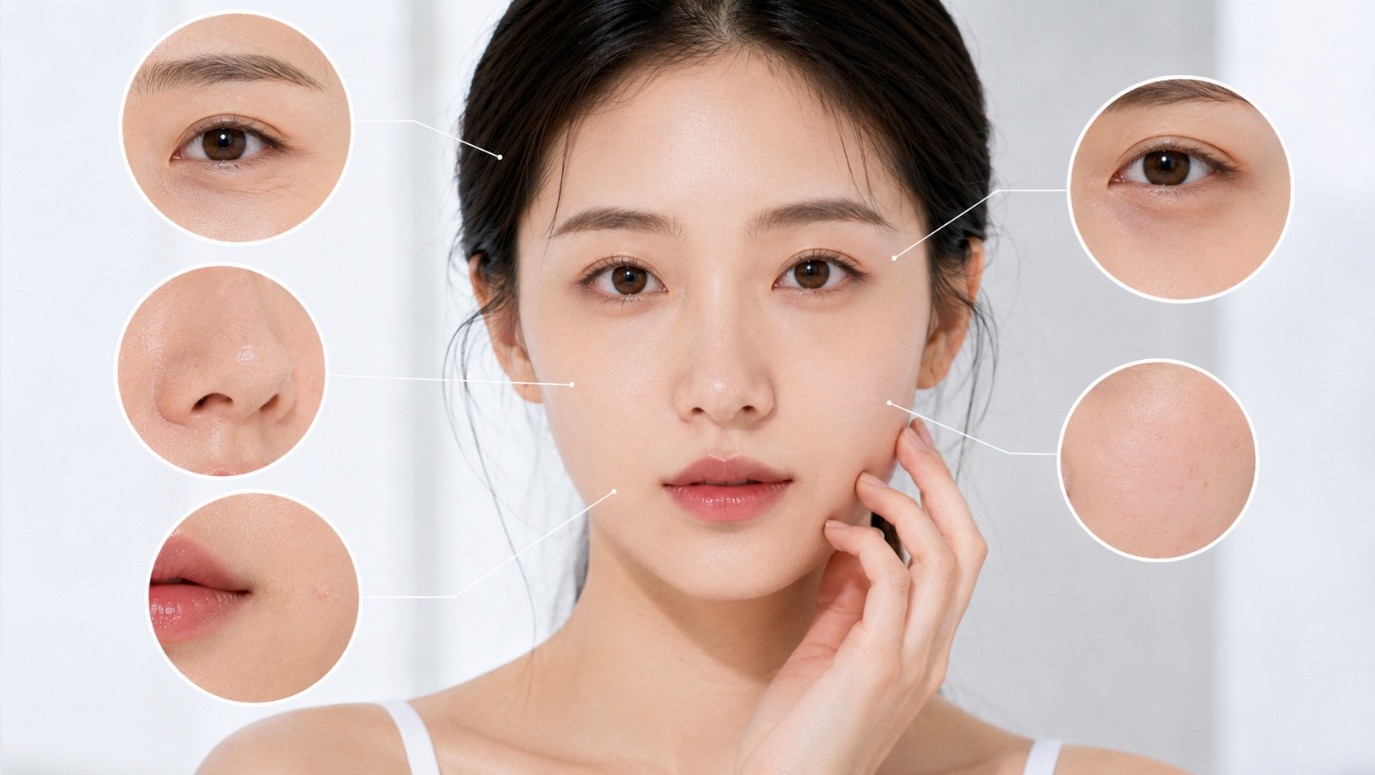
25-30 Years Old (Early Stage): Signs of 'Early Aging' and Recommended Care
The original text describes the period after 25 as one where 'there may not be significant visible issues, but things are not as they used to be.' This can manifest as skin appearing less transparent, slower recovery after all-nighters, and prolonged dullness.
The characteristic of this stage is a decrease in 'skin stability (dryness, sensitivity, skin texture, fine lines)' rather than 'obvious sagging.' Therefore, the focus shifts to maintaining skin condition rather than strong lifting treatments.
- Fine Lines: Light lines appear around the eyes and forehead when smiling
- Makeup: Caking around the nose and mouth, dryness
- Tone: Dullness and yellowish undertones become prominent
- Pores/Oil: The T-zone is oily, while the cheeks are dry
- Sensitivity: Redness after seasonal changes, travel, or lack of sleep
- Volume: The apple zone is less firm, giving a 'tired impression'
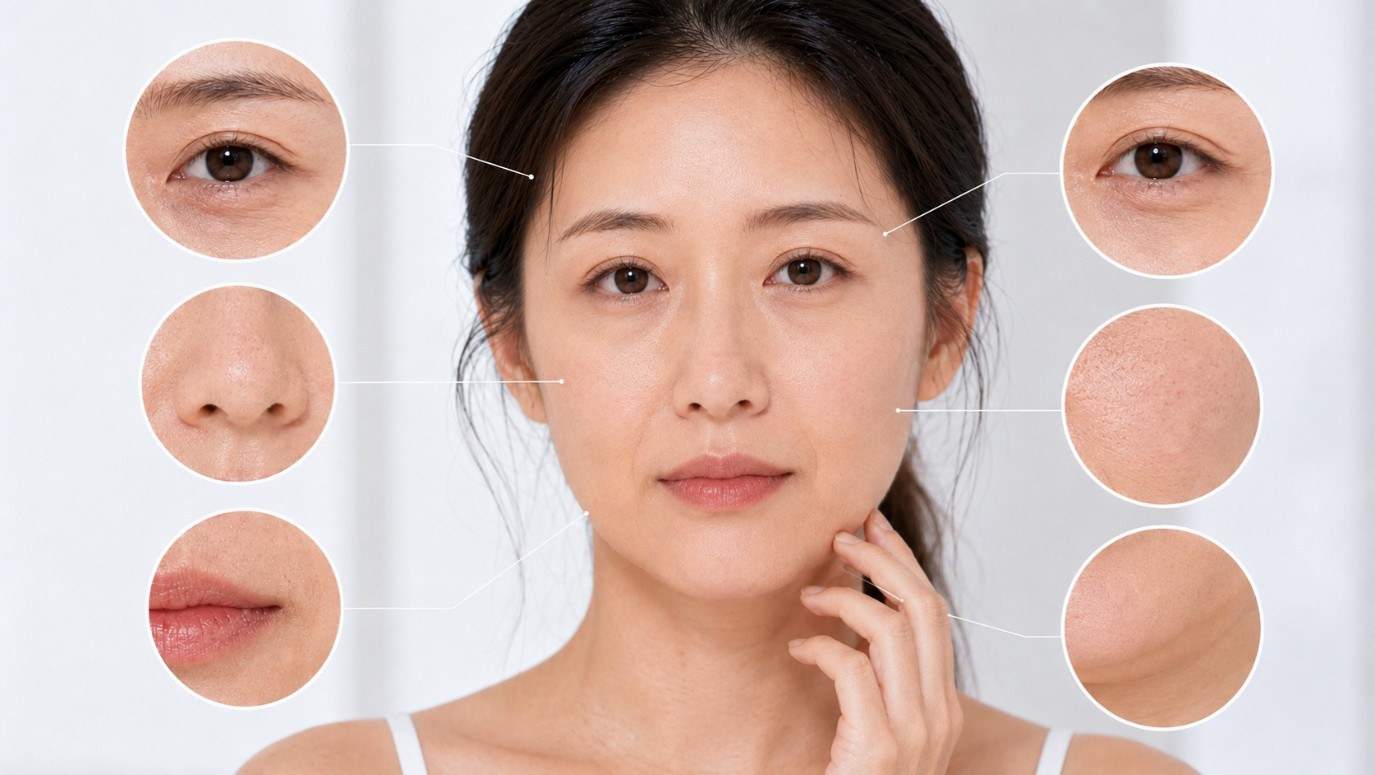
30-40 Years Old (Mild Stage): Focus on Maintaining Collagen and Contours
From the 30s, simple hydration becomes insufficient, and the original text recommends adding 'collagen care.' Changes like fine lines, enlarged pores, and slight sagging can accumulate, so an approach that reinforces the skin's support is introduced.
Another important aspect is 'contour management (lifting)'. When the jawline becomes less defined or the corners of the mouth start to droop slightly, there is a trend to consider lifting aimed at maintaining elasticity rather than drastic changes.
It is also explained that combining skin texture and tone improvement treatments such as light/laser or energy-based management with lifting can result in a more natural appearance.
- Collagen regeneration/management: Mention of collagen water glow, Juverook, and youth injections.
- Contour maintenance lifting: Mention of ONDA, Titanium, and thermal lifting.
- Skin texture/tone: Mention of IPL (Intense Pulsed Light), gold microneedles, etc.
- Wrinkles: Botulinum is introduced as a pre-treatment for expression lines/fixation.
- Goal: Closer to 'maintaining a good condition' rather than 'lifting significantly'.
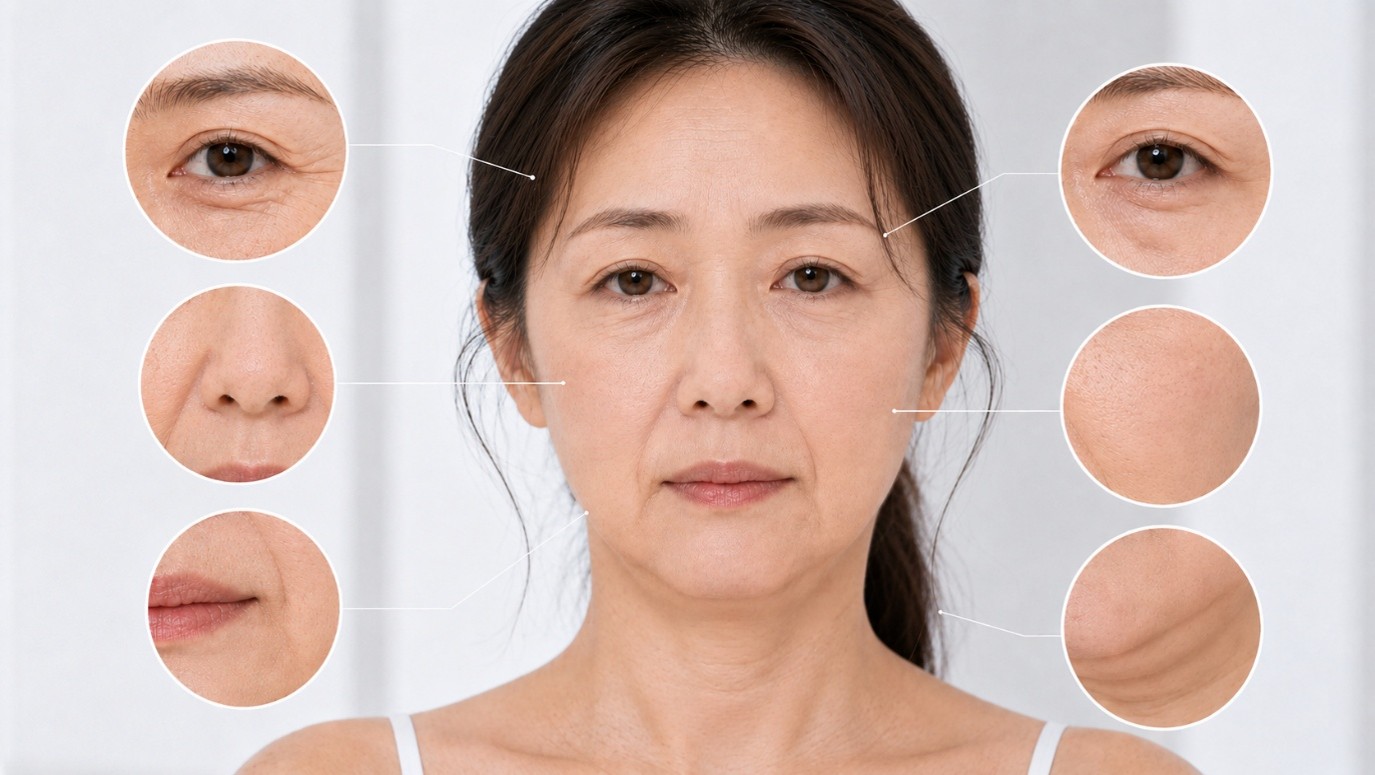
Ages 40-55 (moderate): Simultaneous approach to sagging and hollowness (lifting, regeneration, volume).
The original text describes the 40s as the period when 'the feeling of aging truly begins'. It mentions that highlights fade, the apple zone drops, the jawline blurs, and the corners of the mouth lower, making the overall impression appear tired.
At this time, it is not just a matter of one layer of skin, but changes in multiple layers such as skin, fat, and support structure can occur together, indicating that 'improving skin texture alone' may not be sufficient. Therefore, a combination of lifting (deep layers), collagen regeneration (elasticity), and volume supplementation (hollowness) is suggested.
The original text also summarizes that due to significant individual differences, a 'personalized composite approach' is often used.
- Condition signals: Distinct nasolabial folds/marionette lines, lower apple zone, blurred jawline.
- Changes around the eyes: The upper eyelid slightly droops, giving a tired impression.
- Recommended aspect 1) Deep lifting: Mention of ultrasound lifting (Ultherapy), thermal lifting (Thermage FLX).
- Recommended aspect 2) Collagen regeneration: Mention of collagen water glow, Juverook, and youth injections.
- Recommended Axis 3) Volume/Filler and Regenerative Enhancements: Restoring 'appropriate' volume in sunken areas
- Recommended Axis 4) Combination Treatment: Simultaneous management of sagging, tone, texture, and fine lines
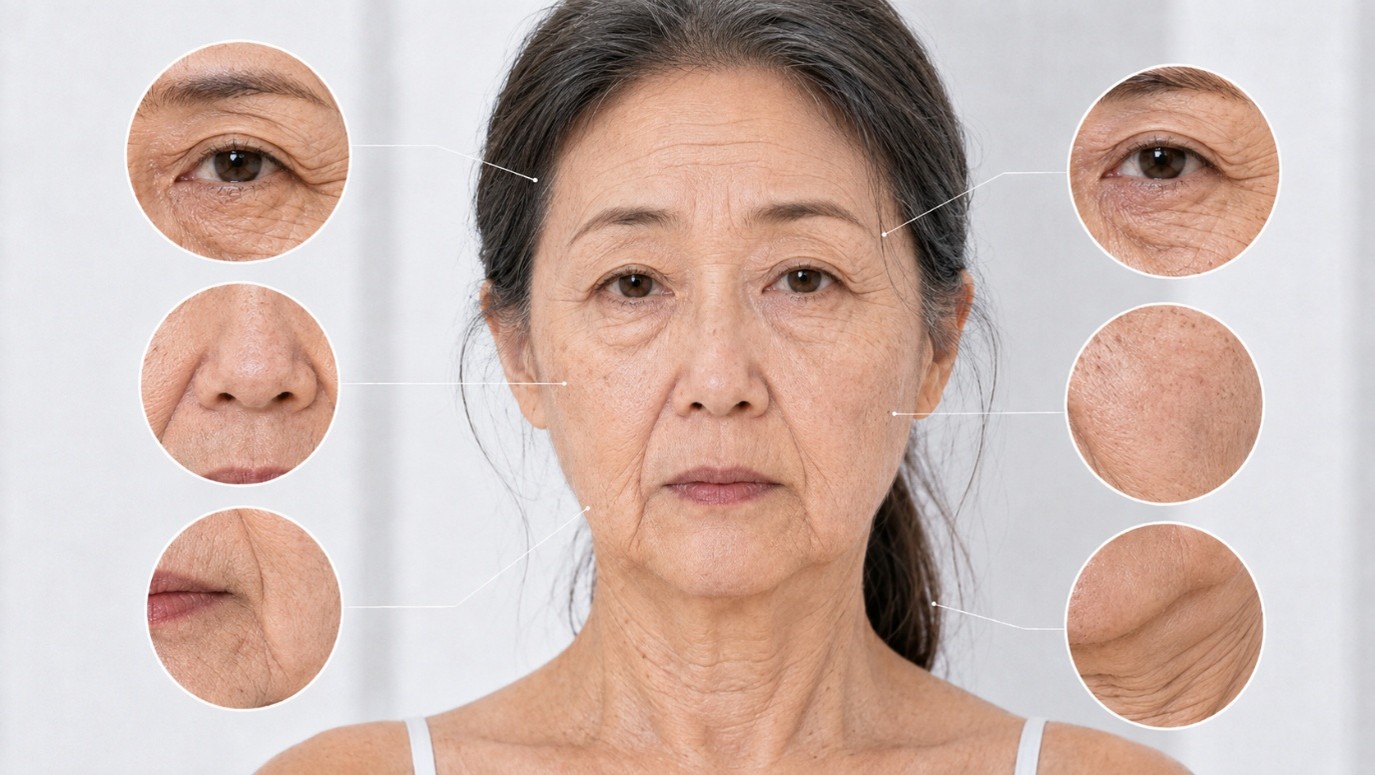
Ages 55 and above (moderate severity): 'Comprehensive evaluation + integrated management' is key
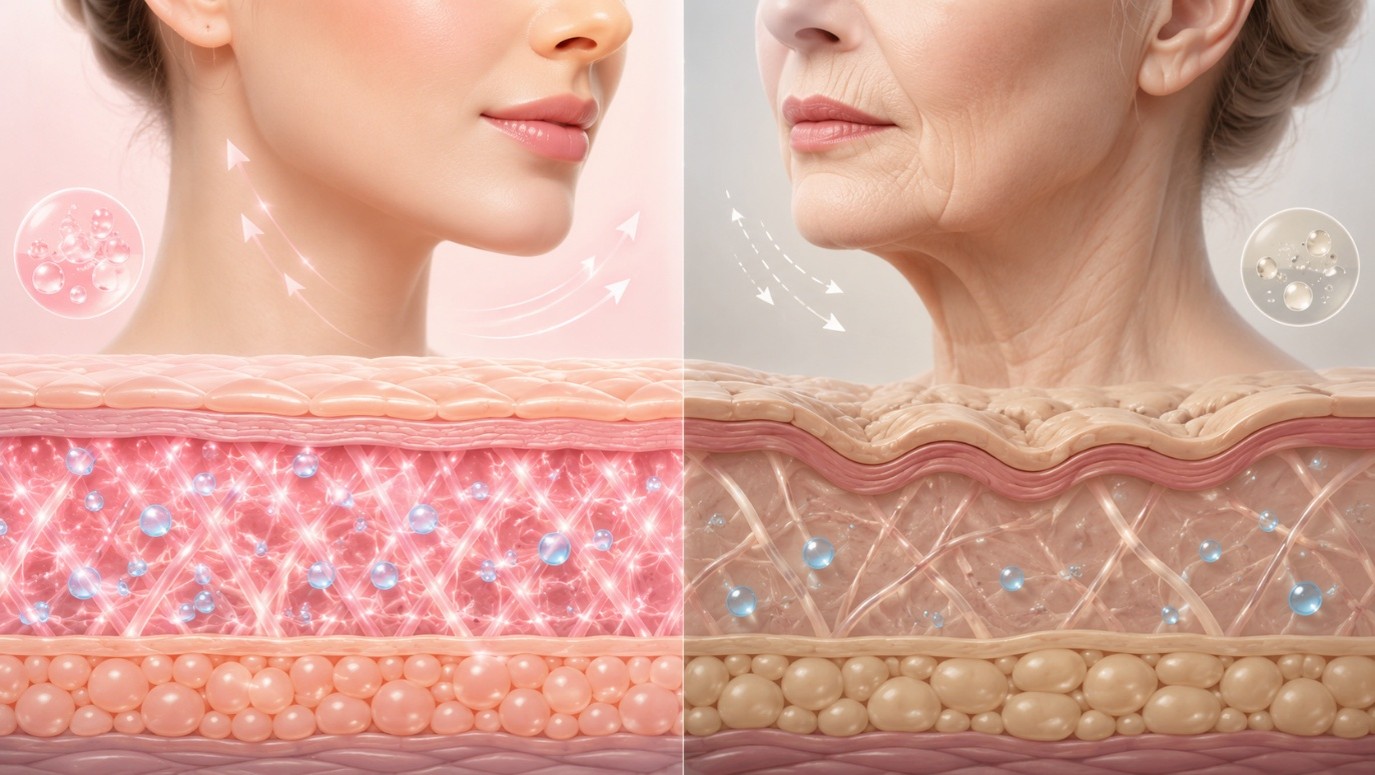
After age 55, it is classified in the original text as 'overall aging stage.' It explains that noticeable sagging and sunken areas occur, skin becomes thinner, and there may be a decline in elasticity, dryness, sensitivity, and recovery speed.
During this period, rather than trying to solve issues with a single procedure, it suggests a comprehensive approach by dividing goals such as contour maintenance (lifting), volume restoration (fat/filler, etc.), targeted wrinkle treatments, and improvements around the eyes. It avoids expressions that imply replacing surgery and describes the role of non-surgical management as 'maintenance/support.'
- Condition Signals: Sunken temples, cheeks, and apple zone, loss of jawline, deepening of neck wrinkles, nasolabial folds, and marionette lines
- Skin Changes: Thinning, dryness, sensitivity, decreased resilience
- Contour Maintenance: Mentioning lifting with heat/ultrasound/titanium as 'supportive'
- Volume: Introduced as one of the common methods being autologous fat grafting
- Wrinkles: Mentioning targeted treatments such as botulinum, hyaluronic acid, and collagen regeneration injections
- Around the Eyes: Individual combinations of under-eye, upper eyelid, and eye area regeneration/volume
Important precautions to check before choosing a procedure (based on the original text)
The conclusion of the original text emphasizes that 'age is a reference' and that skin condition varies according to genetics, diet, sleep, and lifestyle. Therefore, it is prioritized to plan based on one's concerns (tone, texture, dryness, contour, sunken areas, wrinkles) rather than just following trending procedures.
Additionally, it summarizes that procedures are merely 'additional points' and that it is important to proceed gradually rather than doing many at once. Finally, it conveys the message that no procedure can completely replace healthy lifestyle habits and sun protection.
- Choose based on 'current skin issues' rather than age numbers.
- Rather than following trends, prioritize ‘the combination that suits me’
- Instead of doing too much at once, take a ‘gradual’ approach
- Consider condition variables such as lack of visits/travel/sleep
- Combine dietary habits, sleep, exercise, quitting smoking, moderation in drinking, and constant UV protection
Compare recommended procedures step by step at a glance (neutral summary)
The table below summarizes the items mentioned in the original text based on ‘when people often worry about them’. Actual application and combinations may vary depending on individual skin conditions and medical professionals' judgments.
| Step (approximate age) | Main concerns | Management/treatment directions mentioned in the original text |
|---|---|---|
| Step 1: Ages 25-30 | Decreased radiance, dryness, early fine lines, enlarged pores | Basic light/laser management, water glow/collagen management, small amounts of botulinum, daily anti-aging |
| Step 2: Ages 30-40 | Accumulation of fine lines, beginning of contour blurring | Collagen regeneration management, maintaining contours with lifting, combined light/energy and skin texture management |
| Step 3: Ages 40-55 | Sagging + Hollowing + Lines (such as nasolabial folds) | Deep lifting, collagen regeneration, volume enhancement, comprehensive approach |
| Step 4: Ages 55 and above | Overall hollowing, sagging, fixed wrinkles, changes around the eyes | Comprehensive lifting (auxiliary), volume treatments with fat/fillers, area-specific wrinkle treatments, improvement focused on the eyes |
Frequently Asked Questions (FAQ)
At what age should I start anti-aging treatments?
According to the original text, it is recommended to assess the current skin condition (radiance, dryness, fine lines, contour changes, etc.) before age, and to start treatments according to the appropriate stage.
Should I immediately undergo strong lifting treatments in my 25s to 30s?
The original text describes this period as one where skin condition decline is more central than 'obvious sagging,' and suggests first maintaining stability through basic light/laser treatments and hydration/collagen management.
What combinations are often mentioned after the age of 40?
The original text emphasizes that sagging and hollowing can occur together, and suggests combining lifting (deep layers), collagen regeneration, and volume enhancement according to individual conditions.
If I undergo treatments, can I neglect lifestyle management?
The original text concludes that no treatment can replace healthy eating habits, sufficient sleep, exercise, smoking cessation/moderation, and year-round sun protection.
This content is for general informational purposes and the application methods and results may vary depending on individual skin conditions and health status. Please consult a medical professional for an accurate diagnosis and treatment plan.